
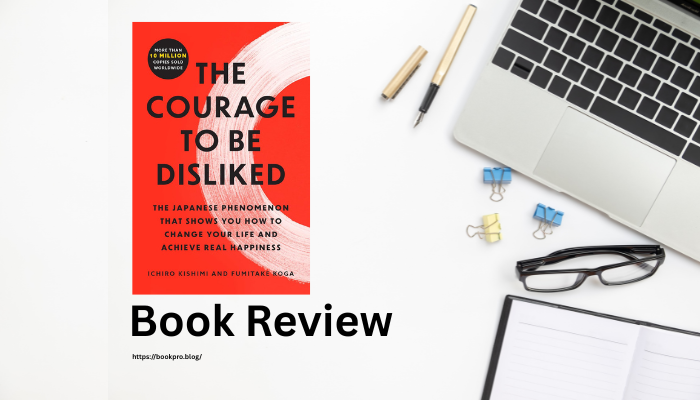
Many people spend years trying to meet other people’s expectations, seeking approval, and worrying about being judged. The Courage to Be Disliked by Ichiro Kishimi and Fumitake Koga challenges this way of thinking and offers a different perspective on happiness, freedom, and personal growth.
Inspired by the psychological theories of Alfred Adler, this bestselling book explores how our beliefs influence our decisions and relationships. Through a conversation between a philosopher and a young man, the authors examine whether it’s possible to overcome the fear of judgment and live according to your own values.
Unlike traditional self-help books that focus on motivation or productivity, this book encourages readers to question deeply held assumptions about success, relationships, and happiness. If you’re considering reading it, this review will help you decide whether it belongs on your bookshelf.
Book Overview
- Book Title: The Courage to Be Disliked
- Authors: Ichiro Kishimi and Fumitake Koga
- Genre: Psychology, Philosophy, Self-Help
- Originally Published: 2013 in Japanese
- Pages: Approximately 288, depending on the edition
- Reading Time: Around 6–8 hours
- Best For: Readers interested in self-awareness, confidence, relationships, and personal freedom.
About the Authors
Ichiro Kishimi is a Japanese philosopher and writer who specializes in Adlerian psychology. Fumitake Koga is a Japanese writer known for presenting philosophical and psychological ideas in an accessible format.
Together, they introduce readers to Alfred Adler’s approach to psychology, which emphasizes personal responsibility, social relationships, and the possibility of changing how we respond to life’s challenges.
What Is the Book About?
The Courage to Be Disliked presents its ideas through a dialogue between a philosopher and a young man who questions his teachings. Their conversations explore why people struggle with insecurity, how past experiences influence present behavior, and whether individuals can change their outlook on life.
One of the book’s central arguments is that people often limit themselves by seeking approval from others. The authors encourage readers to separate their own responsibilities from those of other people instead of trying to control everyone’s opinions or reactions.
The book also examines the importance of healthy boundaries, equality in relationships, and contributing to society without making personal happiness dependent on recognition. Rather than offering a quick solution to every problem, it invites readers to reconsider the beliefs that shape their everyday decisions.
Key Lessons from the Book
Several important ideas make this book particularly thought-provoking:
- Stop seeking constant approval: You cannot make everyone happy, and trying to do so can prevent you from living authentically.
- Take responsibility for your choices: Focus on the decisions you can make instead of allowing circumstances to define your entire future.
- Separate your tasks from others’ tasks: You are responsible for your actions, but you cannot control how other people respond.
- Build healthier relationships: Mutual respect and equality are more valuable than competition or constant comparison.
- Focus on contribution: A sense of belonging can develop through meaningful connections and helping others.
- Choose courage over fear: Living authentically may mean accepting that some people will disagree with you.
These principles encourage readers to develop confidence and approach relationships with greater awareness.
Writing Style and Readability
The authors use a dialogue-based format rather than a conventional narrative. The philosopher explains psychological concepts, while the young man challenges them with doubts and objections that readers may also have.
This approach makes abstract ideas more engaging, although some conversations can feel repetitive or overly philosophical. Readers who prefer quick tips and short exercises may need patience, but those who enjoy exploring ideas in depth may appreciate the format.
What Makes This Book Stand Out?
Unlike many self-help books that focus on positive thinking, The Courage to Be Disliked asks readers to question the beliefs behind their behavior. Its discussion of Adlerian psychology offers a distinctive perspective on personal freedom, social expectations, and emotional independence.
The book’s greatest strength is its challenge to the assumption that happiness depends on approval, status, or past experiences. Some of its ideas may be uncomfortable, but that discomfort can encourage useful reflection.
However, its psychological arguments are best understood as a particular philosophical framework, not as universally accepted explanations for every person’s experiences.
Pros and Cons
Pros
- Introduces interesting ideas from Adlerian psychology.
- Encourages independence and self-awareness.
- Offers useful perspectives on boundaries and relationships.
- Uses a distinctive dialogue-based format.
- Challenges common assumptions about happiness.
- Can inspire meaningful personal reflection.
Cons
- Some arguments may feel oversimplified.
- The dialogue can become repetitive.
- Certain psychological claims may invite disagreement.
- Readers seeking practical exercises may want a more action-oriented book.
Who Should Read This Book?
This book is a good choice for people who struggle with people-pleasing, fear of judgment, or constant comparison. It may also appeal to students of psychology, philosophy enthusiasts, and readers interested in developing stronger personal boundaries.
If you prefer practical guides filled with checklists and step-by-step instructions, the philosophical approach may feel less immediately actionable. Readers should also remember that complex personal difficulties cannot always be explained by one psychological theory.
Final Verdict
The Courage to Be Disliked offers a thought-provoking perspective on personal freedom, relationships, and happiness. Ichiro Kishimi and Fumitake Koga encourage readers to question their dependence on approval and focus on the choices that remain within their control.
Although some ideas may feel challenging or oversimplified, the book provides valuable material for reflection. Its strongest message is that a meaningful life does not require universal approval; it requires the courage to make choices that align with your values while respecting others.
If you’re looking for a book that challenges conventional thinking and encourages greater self-awareness, The Courage to Be Disliked is well worth considering.
Overall Rating: 4.7/5
Where to Buy
You can look for The Courage to Be Disliked at major online bookstores and local bookshops. Compare available editions and prices before purchasing. If you use an affiliate link on BookPro.blog, the website may earn a commission from qualifying purchases at no additional cost to you.

Frequently Asked Questions
Is The Courage to Be Disliked worth reading?
Yes. It offers an interesting introduction to Adlerian psychology and encourages readers to reconsider how approval, relationships, and personal responsibility influence happiness.
Is this book suitable for beginners?
Yes. The dialogue format makes its philosophical ideas accessible, although some sections require careful reading and reflection.
What is the main message of the book?
Its central message is that people can work toward greater freedom by taking responsibility for their choices and reducing their dependence on other people’s approval.
Is The Courage to Be Disliked based on psychology?
Yes. The book draws heavily on Alfred Adler’s psychological ideas, presented through a philosophical dialogue. Its arguments should be considered a perspective rather than a complete account of modern psychology.
Who should read this book?
It may particularly appeal to readers interested in confidence, personal boundaries, relationships, philosophy, and self-improvement.
Amazon Affiliate Disclosure
Bookpro.blog participates in the Amazon Services LLC Associates Program, an affiliate advertising program created to help websites earn advertising commissions by promoting and linking to Amazon.com and its affiliated marketplaces.